Category: Finance

  • JSW Steel Share Price: Why Sajjan Jindal-Led Firm’s Stock Jumped Nearly 3% Today?

    JSW Steel Share Price: Why Sajjan Jindal-Led Firm’s Stock Jumped Nearly 3% Today?

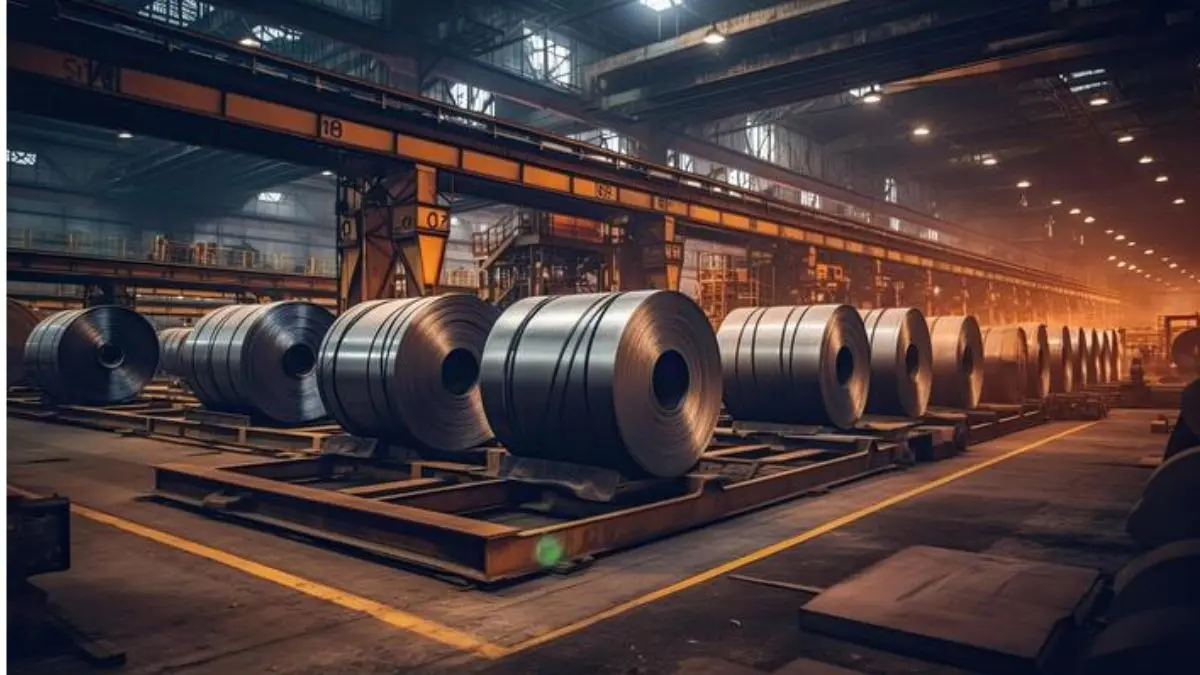
    The shares of steel manufacturer JSW Steel led by Sajjan Jindal gained as much as 2. 68 per cent to Rs 979.75 after the Supreme Court ordered to maintain the status quo on the Bhushan Power and Steel Ltd.

    This marked the biggest intraday gain since May 12 this year.

    The counter has risen 14.5 per cent this year, compared to a 5.6 per cent advance in the benchmark Nifty50. JSW Steel has a total market capitalisation of Rs 2.5 trillion.

    JSW Steel’s resolution plan for Bhushan Power

    The Supreme Court on Monday directed that the status quo be maintained on Bhushan Power & Steel for now. The court issued the direction following a plea filed by JSW Steel, as it seeks a stay on liquidation proceedings for Bhushan Power.

    Earlier this month, India’s apex court set aside a resolution plan submitted by JSW Steel for BSPL, holding it illegal and in violation of the Insolvency and Bankruptcy Code (IBC).

    JSW had acquired BPSL through the corporate insolvency resolution process (CIRP) more than five years ago for nearly Rs 20,000 crore. and has since made substantial investments in the company.

    The review petition is significant for JSW Steel, not just from a legal standpoint but also due to the financial and strategic importance of BPSL to its domestic operations. 

    A bench comprising Justices Bela M Trivedi and Satish Chandra Sharma had criticised the conduct of all key stakeholders in the resolution process, the resolution professional, the Committee of Creditors (CoC) and the National Company Law Tribunal (NCLT), for enabling what it dubbed as “flagrant violation” of the IBC and ordered the liquidation of BSPL under the IBC.

    The bench mentioned that the CoC was found to have approved JSW’s resolution plan without proper application of its commercial wisdom.

    As of 2:48pm on Monday, the shares of JSW Steel was trading 2.13 per cent higher at Rs 1,030. 

  • Paras Defence Stock Tanks 8%—Should You Cash Out Now?

    Paras Defence Stock Tanks 8%—Should You Cash Out Now?

    Paras Defence Share Price: The stock price of Paras Defence and Space Technologies Ltd nosedived as much as 8.02 per cent to hit an intraday low of Rs 858.60 apiece in trade on Monday, July 7, 2025. This was a direct result of the defence major’s recent 1:2 stock split.

    Back in September 2021, the manufacturer of defence and space applications had launched its IPO to garner Rs 170.78 crore via a fresh issue of Rs 175 per share, which is now equivalent to Rs 87.50 post the spilt.

    However, the defence stock despite the pullback has registered impressive gains of 881.25 per cent as compared to its public listing price within a span of four years.

    Meanwhile, the Indian stock market indices BSE Sensex and Nifty 50 have placed this defence stock under the long-term ASM (Additional Surveillance Measure), which indicates high price movement volatility. This comes eve after the technical indicators supported growth, and bullish cues prevailed.

    The reversal in trend came into effect after Paras Defence witnessed an 8 per cent surge in stock price on last Friday’s trading session.

    From a technical perspective, Paras Defence is reportedly likely to find support in the Rs 856–850 range, with the next support zone around Rs 790–780. On the upside, a decisive break above the Rs 950–970 range is needed to signal further upward potential. Meanwhile, analysts are recommending to book profits at the present level. 

    The company is mainly engaged in the designing, developing, manufacturing and testing of various defence and space engineering products. Majorly, it has five major product category offerings in defence and space optics, defence electronics, heavy engineering, electromagnetic pulse protection solutions and niche technologies.

    As of May 19, 2025, the promoter’s group of this defence major as per BSE data held 53.74 per cent stake, which was 3.31 per cent lower as compared to the quarter ended March 2025. 

  • Coffee Day Stock Soars 25% in 3 Days—What Is Brewing?

    Coffee Day Stock Soars 25% in 3 Days—What Is Brewing?

    Shares of Coffee Day Enterprises Ltd (CDEL) have jumped nearly 25% in just three days, rising from Rs 49.90 on Friday to Rs 62.35 by Wednesday’s close. The sudden rally has surprised many, especially since the company hasn’t made any official announcement.

    The stock saw a sharp rise in trading activity, with about 15.83 lakh shares changing hands on the BSE—far higher than the two-week average of 2.70 lakh shares. The day’s turnover stood at ₹6.48 crore, and the company’s market capitalisation was at Rs 869.93 crore.

    Stake Purchase 

    The recent surge in Coffee Day Enterprises’ stock appears to have been sparked by a key update in the company’s shareholding data for the June 2025 quarter. According to disclosures on the BSE, noted investor Dolly Khanna made her entry into the company’s list of shareholders—a move that caught the market’s attention.

    As per the filing, Khanna held 32.78 lakh shares during the quarter, which amounts to a 1.55% stake in the company. Known for spotting undervalued opportunities in the mid- and small-cap space, Khanna’s investments often generate buzz among retail investors, many of whom see her entry as a vote of confidence.

    Revival of fortunes

    There’s growing talk in the market that Coffee Day may be working on settling its debts and planning a comeback. Since founder V.G. Siddhartha’s death in 2019 exposed the company’s financial troubles, it has been trying to get its finances in order.

    Although its café network has reduced, the brand still holds value. That’s why some investors believe a partnership or stake sale might be on the cards.

    Financial Performance

    On the financial front, Coffee Day Enterprises Ltd (CDEL) managed to narrow its net loss to Rs 33 crore in the fourth quarter of FY25, a sharp improvement from the Rs 303 crore loss it reported in the same quarter last year. The company also posted a 7% year-on-year rise in Q4 revenue, which came in at Rs 268 crore.

    After facing several challenging years, CDEL has also shown progress on the operating side. Its EBITDA for Q4 stood at Rs 89 crore, a turnaround from the negative Rs 319 crore recorded a year earlier. For the full year, EBITDA improved to Rs 223 crore, compared to a loss of Rs 208 crore in the previous fiscal, according to the company’s statement.

    About the company

    Coffee Day Enterprises Limited is the parent company of the Coffee Day Group, known for its Cafe Coffee Day (CCD) chain, which pioneered the coffee culture in India’s chained cafe segment. The company is involved in various businesses, including coffee retail and exports, hospitality, technology parks and SEZs, logistics, investments, and financial services.

    Disclaimer: The views expressed in this article are purely informational, and Republic Media Network does not vouch for, promote or endorse any opinions stated by any third party. Stock market and Mutual Fund investments are subject to market risks, and readers are advised to seek expert advice before investing in stocks, derivatives and Mutual Funds

  • SBI Sets Stage for Historic Rs 25,000 QIP: What It Means For Investor

    SBI Sets Stage for Historic Rs 25,000 QIP: What It Means For Investor

    The State Bank of India (SBI) has set its stage for a historic qualified institutional placement (QIP) worth Rs 25,000-crore and it has seen very strong investor interest so far as it was subscribed three-times its offer size in less than a day.

    SBI QIP Worth Rs 25,000

    The PSU lender had launched the QIP in the second half of July 16 at a floor price of Rs 811.05 apiece, at a slight discount of the last traded price.

    These funds are supposed to help the public sector lender’s loan growth and strengthen the balance sheet further. This is also the first time ever since 2017 that SBI has tapped into the equity market to raise funds.

    The QIP has received bids for Rs 75,000 crore worth of shares as against its offer size of Rs 25,000 crore.

    The anchor investor for the QIP is the Life Insurance Corporation of India (LIC) and it led the race among domestic fund houses by bidding for shares worth Rs 7,000 crore.

    Quant Mutual Fund has followed, by bidding for shares worth Rs 3,000 crore. HDFC Pension Fund, ICICI Prudential Mutual Fund, Motilal Oswal Mutual Fund and Birla Mutual Fund also participated strongly.

    Among foreign institutional investors (FIIs), Nomura has bid for shares worth Rs 1,800 crore while Marshall Wace and Millennium bid for Rs 1,500 crore shares each.

    What Does This Mean For Investors?

    This is part of SBI’s broader plans to support loan growth, strengthen its balance sheet and meet regulatory requirements.

    The PSU bank has also shortlisted six investment banks to manage the transaction, including the Indian arms of Citigroup Inc. and HSBC Holdings Plc, as well as ICICI Securities Ltd., Kotak Investment Banking, Morgan Stanley, and SBI Capital Markets Ltd., Bloomberg said in a report.

  • Jio Financial Q1 FY26 Results: Mukesh Ambani-Led NBFC Reports 3.8% YoY Rise In Net Profit

    Jio Financial Services Limited, the NBFC arm of Reliance Industries, led by Mukesh Ambani, announced its Q1 FY26 results, showing steady growth in profitability and a sharp jump in revenue.

    The company reported a net profit of Rs 324.66 crore, up 3.8% year-on-year, while revenue from operations surged nearly 47% to Rs 612.46 crore, driven by strong interest income and fair value gains.

    The company’s revenue from operations stood at Rs 612.46 crore in Q1 FY26, a significant 46.6% increase from Rs 417.82 crore in Q1 FY25. This growth was driven mainly by higher interest income and gains on fair value changes. Interest income rose to Rs 362.86 crore, up from Rs 161.74 crore a year ago, marking a sharp 124.3% year-on-year increase.

    The company also earned Rs 196.02 crore from fair value changes in Q1 FY26, compared to Rs 178.07 crore in the same period last year. Total income, including other income, rose to Rs 619.06 crore in Q1 FY26 from Rs 418.27 crore in Q1 FY25—an overall 47.9% increase.

    Total expenses rose to Rs 229.64 crore from Rs 168.79 crore in Q1 FY25, primarily due to higher finance costs and employee benefit expenses.

    Earnings per share (EPS), on a basic basis before exceptional items, were Rs 0.47 in Q1 FY26, slightly lower than Rs 0.49 in Q1 FY25.

    On the bottom line, total comprehensive income, which includes other comprehensive income (OCI), jumped to Rs 16,576.45 crore in Q1 FY26 from Rs 4,534.26 crore in Q1 FY25. This surge was largely due to gains in equity instruments valued through OCI, amounting to over Rs 11,212 crore.

  • Ajay Bagga Decodes Big Question For Markets

    Ajay Bagga Decodes Big Question For Markets

    In a recent development, the US customs duties collections has surged again in June as US President Donald Trump’s tariffs talks were reiterated again, topping $100 billion for the first time during a fiscal year and helping to produce a surprise $27 billion budget surplus for the month, the Treasury Department reported.

    According to US budget data, tariffs are starting to become a significant revenue contributor for the federal government, with customs duties in June hitting new records.

    Previously Trump had said that “the big money” would start to flow in after he imposes higher “reciprocal” tariffs on U.S. trading partners on August 1.

    What Does Market Expert Ajay Bagga Say?

    The US markets were up on strong economic data, market expert Ajay Bagga said on Friday as the Asian markets are following the lead, with Australian markets hitting an all time high.

    Bagga added that the Japanese inflation is coming down just before this months’ election and this is seen in a positive light.

    Additionally, “markets have been driven by concerns on US deficit and debt, Trump policy uncertainty, tariff’s impact and the White House criticism of the US Fed and Chair Powell, with markets unnerved by talk of Trump firing Powell.”

    The Chair of the US Federal Reserve, Jerome Powell was recently on Trump’s target as he has suggested that he is considering removing Powell.

    “However, strong earnings and a stable US economy is providing a silver lining which markets are grasping to rally to all time highs,” Bagga added.

    “India is seeing continued FPI selling and another underwhelming earnings season for IT so far. As more bellwethers come out with their earnings, the guidance for the rest of the year and the next will provide the catalyst for Indian markets,” he further added.

    How Can The US Customs Collect $100 Bn In Enhanced Tariff Revenues?

    According to Ajay Bagga, though the US CPI is rising, it is still below 3%.

    According to him, in order to collect $100 billion in enhanced tariff revenues, US corporates would need to deliver steady margins and profits, and it would be imperative that the US labour market stops seeing mass layoffs on shrinking corporate margins.

    Additionally, the US retail consumption would need to stay steady and upwards.

    Further, Bagga added that no one is footing the $100 billion in 6 months, $ 64 billion in Q2 , and expected to be $ 300 billion in 12 months bill, starting from US consumers to corporates, especially in terms of reducing margins so far.    

    What Is Happening Then?

    According to Ajay Bagga, the following factors are occurring:

    1. The fall in energy and services prices is helping keep US inflation low.
    2. Foreign exporters have cut their pricing and absorbed a large part of the tariffs so far.
    3. A lot of non-perishable goods were front loaded and preordered from December to March 2025, those inventories are now running down.
    4. As foreign exporters absorb some of the tariffs via lower offered prices, their margins shrink, they pressurise their suppliers, who pressurise their suppliers…that deflation is evident across the world in the form of negative WPI/PPI….

    Will This Sustain?

    “As per estimates, the tariff impact has been absorbed by various parties…Foreign suppliers, their supply chains; US importers and their margins; US consumers (2.9% core CPI in June),” Bagga said.

    Going ahead, Bagga added, investors should expect more pass through to US consumers as exporter margins reach loss making levels, as US importers are not able to absorb any more of the tariffs.

    Additionally, inflation will rise past 3% in the next quarter.

    “As de-inventorisation happens (running at around $600 billion per month now), more price decisions will need to be taken by Exporters/Importers/Retailers/ End Consumers,” the market expert noted.

    Further, Bagga added that this $300 billion tariff will ultimately be a drag on the $16 trillion US consumer market or on the $3.2 trillion US goods import market.

    The impact is masked by absorption of these costs in supply chain margins for now, he added. As pass throughs accelerate, investors can expect demand to be impacted.